VAR review: Why did Man United have a penalty overturned and a free kick awarded?
Former Manchester United midfielder Scott McTominay has revealed that he still has love for the club. (0:43)

Video assistant referee causes controversy every week in the Premier League, but how are decisions made and are they correct?
This season, we take a look at the major incidents to examine and explain the process, both in terms of VAR protocol and the Laws of the Game.
 Andy Davies (@andydaviesref) is a former Select Group referee, with over 12 seasons on the elite list, working across the Premier League and Championship. With extensive experience at the elite level, he has operated within the VAR space in the Premier League and offers a unique insight into the processes, rationale and protocols that are delivered on a Premier League matchday.


Manchester United 3-2 Fulham
Referee: John Brooks
VAR: James Bell
Time: 16 minutes
Incident: Factual VAR overturn
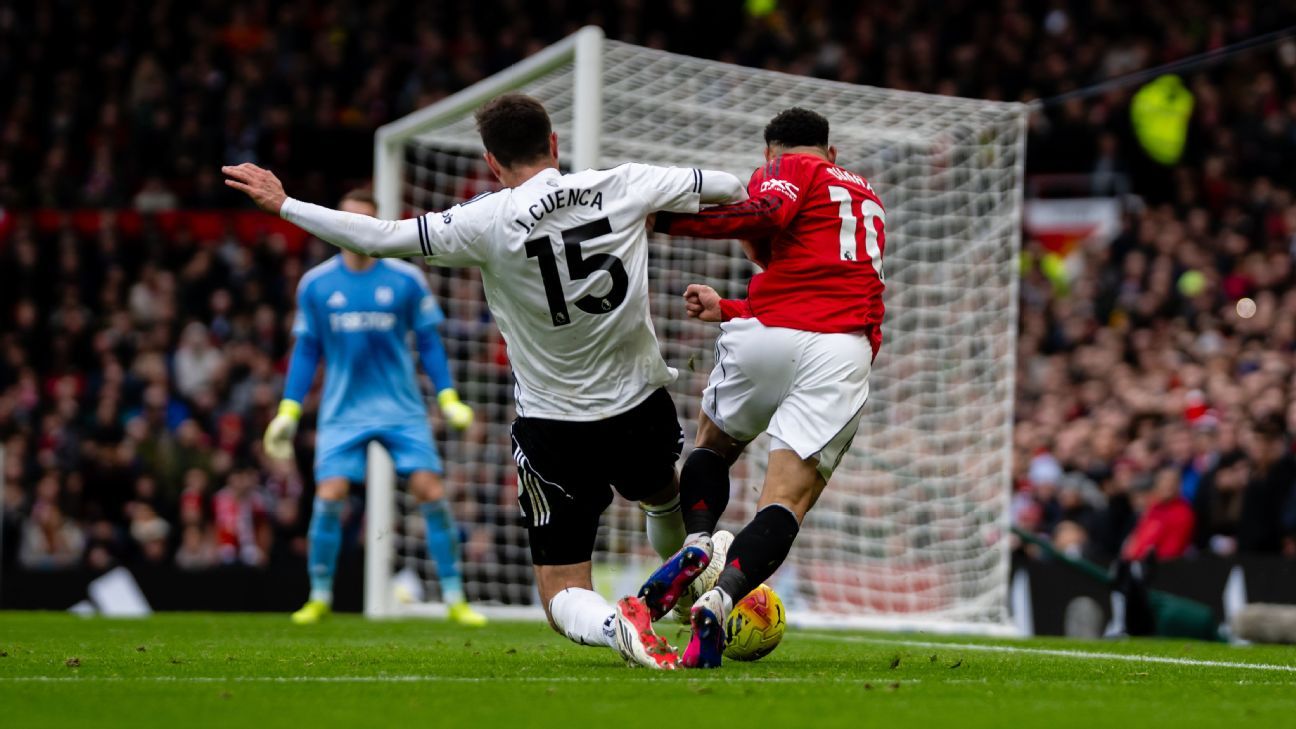
What happened: Manchester United were initially awarded a penalty for an alleged foul on Matheus Cunha by Fulham defender Jorge Cuenca, however the decision was overturned by the VAR and a free kick was given outside the box instead.
VAR decision: After VAR review, the referee overturned his on-field decision of penalty to Manchester United and awarded a free kick, saying: “After review, the Fulham No. 15 commits a holding offence outside the penalty area. The final decision is a free kick to Manchester United.”
VAR review: The live communication from referee Brooks is key to this review. Brooks would have described that he had spotted a holding offence that started outside the penalty area and continued inside, therefore his final decision was to award a penalty kick. The perception to many fans was that the penalty was awarded for the challenge by Cuenca on Cunha — a challenge where the Fulham player clearly got a foot on the ball.
The VAR’s process focused on the upper-body contact described by referee Brooks. But, contrary to Brooks’ communication, the VAR determined that contact started and finished outside the penalty area, and therefore the penalty award was factually incorrect and an overturn was necessary.
A secondary check by VAR on the challenge by Cuenca was completed quickly, then the message relayed to Brooks to overturn his original decision.
Verdict: The merits of penalizing the holding offense can be debated. This one was certainly at the low end of the threshold, and it will only gain attention because of the penalty overturn and the fact that United scored from the resulting free kick.
If the holding offense had been inside the box, it would have been reviewed by VAR on the basis of it being a foul. But because it didn’t, it was simply a factual overturn on the positioning of the foul and didn’t require the referee to go to the monitor.
A correct outcome.
Leave a Reply